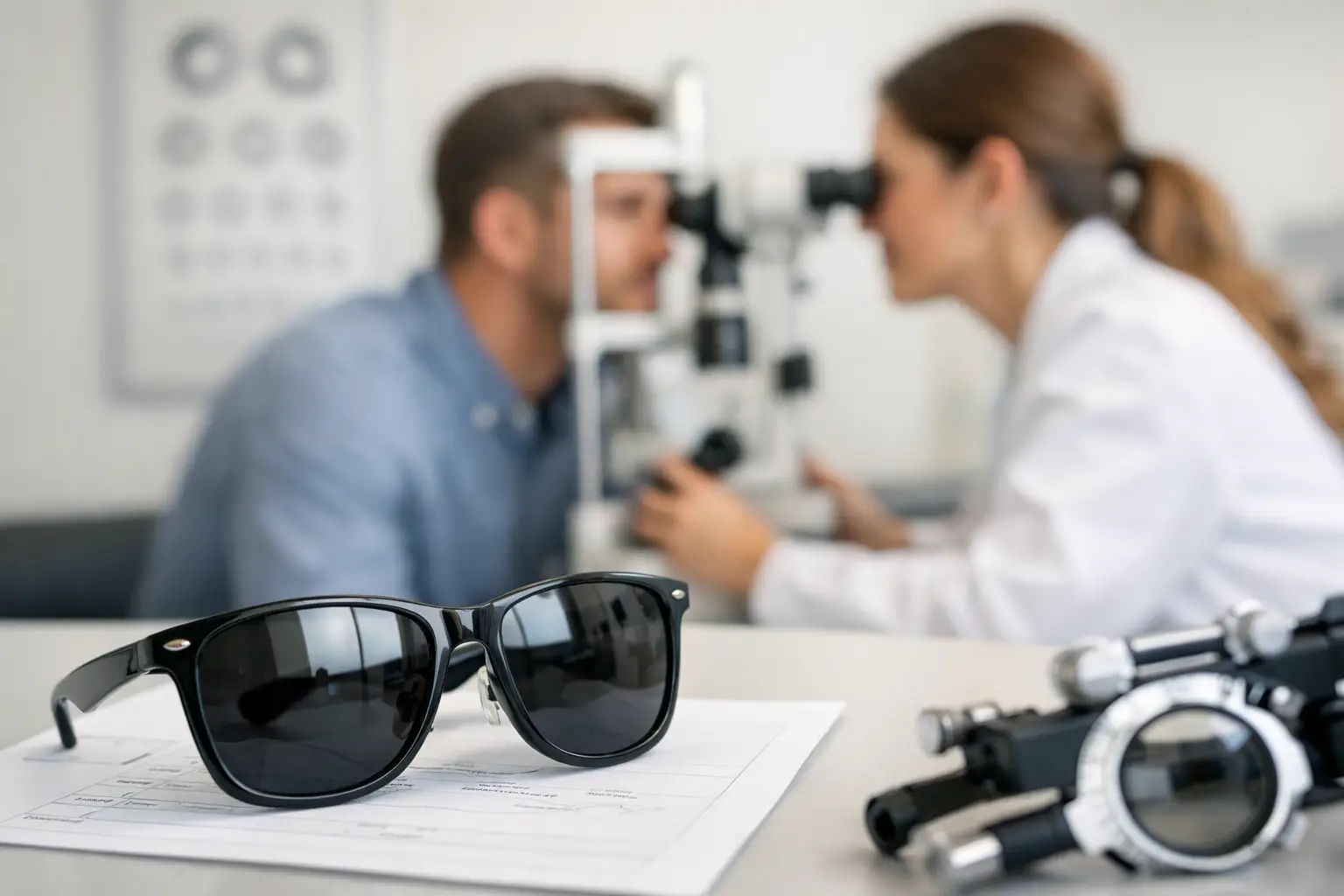
Bright sun has a way of exposing every weakness in a pair of glasses. If you’re squinting while driving, swapping between regular prescription lenses and cheap sunglasses, or dealing with glare at the lake, it may be time to look into prescription sunglasses with eye exam service together. It is one of the simplest ways to make sure your eyes are protected and your vision is actually working for your day-to-day life.
For many people, sunglasses are treated like an extra. They should not be. If you already rely on prescription lenses, your sunglasses matter just as much as your everyday glasses. The difference is that they also need to manage sunlight, glare, and UV exposure without making your vision feel distorted or dim in the wrong way.
Why prescription sunglasses with eye exam service makes sense
There is a real advantage to having your eye exam and sunglasses selection connected. Your prescription needs can change gradually, and those small changes are often most noticeable outdoors. Road signs may look softer than they used to. Bright conditions can make focusing more tiring. If your current sunglasses are based on an outdated prescription, they may still feel usable, but not comfortable.
A current eye exam helps take the guesswork out of the process. Instead of choosing lenses based on what used to work, you are choosing based on what your eyes need now. That matters whether you wear a simple single-vision prescription or something more specific, like progressive lenses or prism correction.
It also saves time. Rather than booking an exam in one place and trying to sort through frame and lens options somewhere else, you can ask questions while everything is fresh. That makes it easier to decide what you actually need instead of buying something that sounds good at the counter but does not suit how you live.
What to expect from an eye exam before buying sunglasses
An eye exam is not just about checking whether you can read smaller letters on a chart. It helps confirm your prescription, assess how your eyes are working together, and identify changes that could affect your comfort outdoors. If you have been getting headaches in bright light, struggling with glare, or noticing more eye fatigue while driving, those details are worth mentioning.
That conversation matters because the best prescription sunglasses are not only about lens power. They are also about how you use them. Someone who spends hours driving has different needs than someone who wants a pair for weekend walks, golf, patio time, or coaching their child’s soccer team.
In a family-run optical setting, the benefit is often the extra time to talk through those real-life details. You are less likely to feel rushed into a frame or lens package that does not fit your budget or your routine. Honest advice is especially valuable with sunglasses, because there are useful upgrades and there are extras that may not make a meaningful difference for you.
Choosing the right prescription sunglasses
The right pair starts with your prescription, but it does not end there. Frame fit, lens color, lens material, and coatings all affect how the sunglasses perform.
Fit is more important than many people expect. A frame that looks great but slides down your nose or lets too much light in from the sides can become frustrating quickly. Wrap-style frames can be helpful for some outdoor activities, but they are not ideal for every prescription. Larger fashion frames may offer better sun coverage, but lens thickness and weight can become a factor for stronger prescriptions. It depends on your lenses, your face shape, and how you plan to wear them.
Lens color also changes the experience. Gray lenses are a popular choice because they reduce brightness while keeping colors fairly natural. Brown or bronze tones can improve contrast for some people, which can be nice for driving and outdoor sports. Green can offer a balanced middle ground. There is no single best tint for everyone, which is why personal guidance matters.
Polarization is another common question. In many cases, polarized lenses are worth it because they reduce reflected glare from roads, water, and other flat surfaces. That can make driving and outdoor time much more comfortable. But there are trade-offs. Some digital screens can be harder to read through polarized lenses, and not everyone prefers that effect. If you use your sunglasses in mixed settings, it helps to talk through that before you decide.
Prescription sunglasses with eye exam for driving, sports, and everyday wear
Not every pair needs to do everything. Some people want one all-purpose pair. Others are better served by choosing sunglasses around a specific use.
For driving, clear distance vision and glare control are usually the priorities. A comfortable frame that sits well for long periods matters too. If your current lenses are slightly off, driving is often where you feel it first.
For outdoor sports and active use, durability and secure fit become more important. Lightweight materials can help, and lens choices may depend on the environment. A pair for cycling or golf may not be the same pair you want for sitting on a patio or running errands.
For everyday wear, versatility usually wins. That often means a frame that feels easy to wear, a tint that is comfortable in different light conditions, and lenses that suit your typical routine without adding cost for features you may not use.
Why local service makes the process easier
Buying prescription sunglasses is easier when you can sit down with someone who will actually listen. Many people have had the experience of walking into a large retailer, getting rushed through a few options, and leaving unsure if they made the right choice. That is especially frustrating when the purchase is not inexpensive.
A local optical store can make the process feel much more straightforward. You can ask practical questions. Is this frame comfortable for all-day wear? Will this lens work for driving? Is this option worth the price, or is there a more affordable alternative that does the job just as well? Those are the questions that matter most.
That kind of support is especially helpful for families, seniors, and anyone with a more complex prescription. Children may need durable options and a fit that stays comfortable. Older adults may need help balancing sun protection with multifocal lenses. Some customers simply want someone to explain their choices clearly without pressure. That is where personal service really shows its value.
At Dala Optical, that approach is part of the experience. The focus is on helping people find what works for their vision, budget, and everyday life without upselling or confusion.
Cost, coverage, and value
Prescription sunglasses are an investment, but they do not have to feel out of reach. The final price depends on your prescription, frame choice, and lens features. Stronger prescriptions, progressives, and specialty lens options can cost more, but that does not mean the most expensive pair is automatically the best one for you.
What matters is value. A well-chosen pair that fits properly, protects your eyes, and gives you comfortable vision every time you step outside is worth much more than a cheaper pair that sits in a drawer because you never liked wearing it.
If you have vision benefits, it is worth checking what is covered. Some plans may contribute toward an eye exam, prescription sunglasses, or both. Direct billing can make that process simpler and reduce the stress of paperwork.
When it is time to replace your current pair
Sometimes the signs are obvious. Your lenses are scratched, your frame is bent, or your prescription has clearly changed. Other times, it is more subtle. You may notice more squinting in bright light, more strain on sunny days, or a sense that your sunglasses just are not as comfortable as they used to be.
If it has been a while since your last exam, or if your outdoor vision no longer feels sharp and relaxed, it is a good time to revisit your options. A better pair of sunglasses can make driving safer, time outside more comfortable, and everyday vision feel less like work.
Good sunglasses should help you forget about them once they are on. They should fit well, protect your eyes, and let you enjoy the day with clear, comfortable vision. If that sounds better than juggling mismatched pairs and hoping for the best, it may be time to choose a pair that is made for you from the start.
Leave a Reply