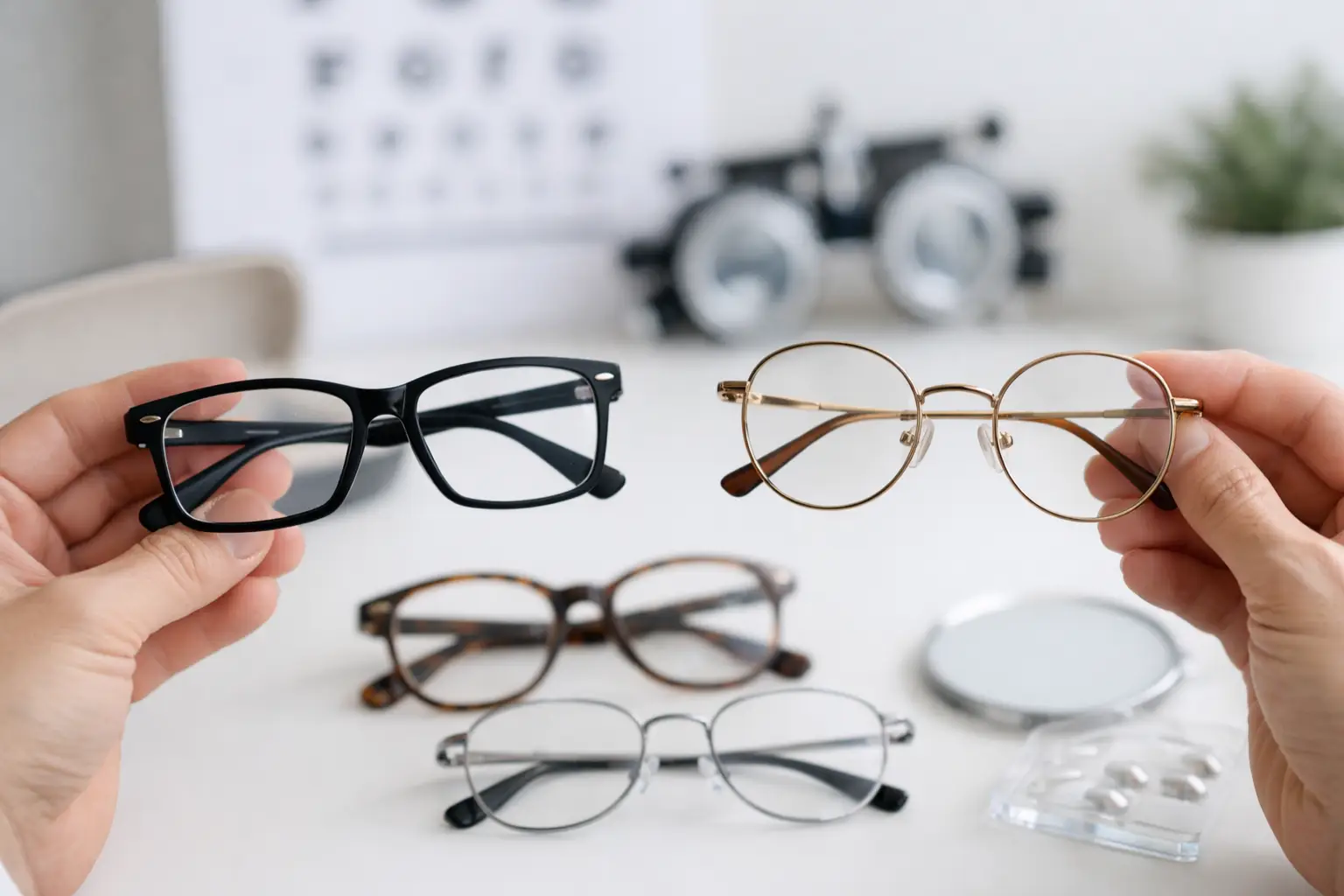
You usually know a frame is wrong before anyone says a word. It slides down your nose, pinches behind your ears, feels too heavy by lunchtime, or simply does not look like you. That is why learning how to choose prescription frames is not really about chasing trends. It is about finding a pair that feels comfortable, works with your prescription, and fits your everyday life.
A good frame should do more than look nice in the mirror for 30 seconds. It needs to support your lenses properly, sit well for hours at a time, and hold up to real use. For some people, that means a lightweight pair for work. For others, it means something durable enough for school drop-offs, busy shifts, or long days on the go. The best choice is usually the one that balances fit, function, and personal style without making you feel pushed into extras you do not need.
How to choose prescription frames for real life
The easiest place to start is with your daily routine. If you wear glasses from morning to night, comfort matters more than almost anything else. If you switch between contacts and glasses, you may care more about style and flexibility. If you spend most of your day at a computer, frame weight and lens size can make a bigger difference than you might expect.
This is also where honest advice matters. A frame that looks great on display may not be the best option for your prescription or your face shape. On the other hand, a frame you would never pull off the shelf yourself can end up being the one that fits beautifully and feels right right away. Trying frames on with guidance usually saves time, money, and frustration.
Start with fit before style
Most people begin by looking at color or brand, but fit should come first. If the frame does not sit correctly, even the best-looking pair will become annoying fast. A proper fit means the bridge rests comfortably on your nose, the temples sit securely over your ears, and the frame stays in place when you move your head.
The width matters too. If the frame is too narrow, it can pinch at the temples and look tight on the face. If it is too wide, it may slide or sit unevenly. Your eyes should sit near the center of each lens area, not too far inward or outward. That helps both appearance and lens performance.
Children, teens, and adults all have different fit needs, and those needs can change over time. A pair that worked five years ago may not be the best shape or size for you now. That is normal. Good frame selection is less about rules and more about getting the proportions right.
Face shape helps, but it is not the whole answer
You have probably heard general advice like round faces suit angular frames and square faces suit softer shapes. There is some truth in that, but it is only a starting point. Face shape can help narrow your options, but it should not box you in.
Your features matter just as much as your overall shape. Someone with a round face and delicate features may suit a different frame than someone with a round face and stronger brow lines. Skin tone, hairstyle, eyebrow shape, and even how a frame sits on your nose all affect the final look.
Instead of trying to follow strict style rules, pay attention to balance. A frame should complement your features rather than overpower them. If it is the first thing anyone notices, it may be too bold for your face. If it disappears completely and that is not what you want, it may be too subtle. There is room for both classic and statement styles, but the best pair usually feels balanced.
Your prescription affects your frame choice
This is the part many people do not think about until after they order. Some frames simply work better with certain prescriptions. If you have a stronger prescription, smaller lens shapes can often help reduce edge thickness and overall weight. Very large frames may still be possible, but there can be trade-offs in lens thickness, appearance, and comfort.
Progressive lenses also need enough vertical space to work properly. A frame that is too shallow may limit how well those lenses perform. Prism correction and other more complex prescriptions can make frame fit even more important, since proper alignment matters.
This does not mean you have to give up on style. It just means your frame should support your lenses, not fight against them. A good optical team will tell you honestly when a frame is a strong match for your prescription and when another option may serve you better.
Think about weight, materials, and comfort
Frame material can change how glasses feel after a full day of wear. Some people prefer the lighter feel of certain metals, while others like the flexibility and look of acetate. There is no single best material for everyone.
If you are sensitive to pressure on the nose or behind the ears, lightweight frames may be worth prioritizing. If durability is your biggest concern, especially for children or very active adults, sturdier materials and practical frame shapes often make more sense. Adjustable nose pads can also help with comfort and fit, especially if you have trouble with slipping.
This is one of those areas where trying frames on matters more than reading specs. Two frames can look similar but feel completely different after a few minutes. Comfort is not a small detail. It is a major part of whether you will actually enjoy wearing your glasses.
How to choose prescription frames that match your style
Once fit and prescription needs are covered, style becomes much easier. The goal is not to choose the frame that gets the biggest reaction. It is to choose the one that feels like an honest extension of you.
If this is your only pair, a versatile style often makes sense. Neutral tones, clean shapes, and moderate sizes usually work well across work, casual, and social settings. If you already have a dependable everyday pair, you may feel more comfortable choosing something with more color or personality.
Think about your wardrobe too. If you mostly wear warm neutrals, a frame in tortoise, brown, gold, or soft rose may feel more natural than stark black. If your style is modern and simple, clear frames, matte finishes, or slimmer metals may fit better. The right frame should feel easy to wear, not like a costume.
Budget matters, and so does value
People often feel awkward talking about budget when shopping for glasses, but they should not. Your budget is part of the decision, and a good optical store should respect that. Higher price does not automatically mean better value for your needs.
Sometimes it makes sense to invest a little more in a frame you will wear every day for years. Other times, a well-made affordable option is the smarter choice. The key is understanding what you are paying for – materials, fit, warranty, service, and how well the frame works with your lenses.
That is where a local, service-focused optical shop can make a real difference. At Dala Optical, many families and individuals appreciate being able to ask questions, compare options honestly, and find something that fits their budget without feeling pressured into a bigger sale.
Do not ignore the little adjustments
Even the right frame can feel wrong if it is not adjusted properly. Small changes to the nose pads, temple arms, or frame alignment can completely change the comfort and fit. If your glasses slide, sit crooked, or leave pressure marks, the frame may not be a bad choice at all. It may simply need a proper adjustment.
That is one reason in-person service still matters. Eyewear is not just a product you pick off a shelf. It is something you wear on your face every day. Being able to come back for adjustments, repairs, and support adds real value long after the purchase.
A few mistakes to avoid
The most common mistake is choosing based on appearance alone. A close second is buying a frame that is technically wearable but not truly comfortable. People also sometimes choose oversized styles without considering how their prescription will look in that shape, or they settle for something they do not love because they feel rushed.
It is also easy to overcorrect and pick a frame that feels too safe. If you wear glasses every day, you should like how you look in them. Practical does not have to mean boring. Comfortable does not have to mean plain.
The right pair usually lands somewhere in the middle. It fits well, suits your prescription, feels comfortable, and looks like something you would happily put on every morning.
Choosing prescription frames should feel personal, not stressful. When you have honest guidance, enough time to try options, and support after the sale, the process gets much simpler. The best frame is not the one someone talked you into. It is the one that quietly feels right the moment you put it on.
Leave a Reply