If you have an appointment coming up and you are wondering what happens during eye exam visits, you are not alone. A lot of people put off booking because they are not sure what the process looks like, whether it will take a long time, or if they will feel pressured into buying glasses. The good news is that a routine eye exam is usually straightforward, comfortable, and focused on helping you see clearly while keeping an eye on your overall eye health.
For many patients, the hardest part is simply not knowing what to expect. Once you understand the steps, the visit feels much easier. Whether you are booking for yourself, your child, or an older family member, knowing the process ahead of time can make the experience feel a lot more relaxed.
What happens during eye exam appointments
An eye exam is not just about reading letters on a chart. It is a full check of how well you see and how healthy your eyes are. The exact steps can vary a little based on your age, your vision history, your symptoms, and whether you already wear glasses or contact lenses.
In most cases, the appointment starts with a few basic questions. You may be asked if you have noticed blurry vision, headaches, eye strain, dryness, double vision, trouble seeing at night, or changes in reading comfort. If you already wear glasses, the doctor will usually want to know how they are working for you and whether your prescription still feels right.
This part matters more than people think. A prescription is only one piece of the picture. Your daily habits, screen use, driving needs, reading distance, and comfort all help shape what kind of testing and recommendations make the most sense.
Reviewing your health and vision history
Before the actual testing begins, there is often a review of your medical history. That can include current medications, past eye conditions, family history of eye disease, and general health concerns such as diabetes or high blood pressure. These details are useful because many health issues can affect the eyes.
For children, parents may be asked about school performance, squinting, sitting too close to screens, or complaints about headaches. For seniors, the conversation may include glare, reading difficulty, floaters, or changes in depth perception. Every age group has different needs, so the exam is usually tailored rather than one-size-fits-all.
Checking your current prescription
If you already wear glasses, one of the first steps may be measuring your current lenses. This shows what prescription you are using now and gives a useful starting point. It does not mean your old prescription will stay the same. It simply helps compare your existing correction with what your eyes need today.
Then comes visual acuity testing, which is the familiar part where you read letters from a chart. You may do this with and without your glasses, depending on the reason for your visit. This test helps measure how clearly you see at a distance.
Near vision may also be checked, especially if you are over 40, use screens often, or have noticed trouble reading small print. Some people only need a small prescription update, while others may learn they now need separate help for distance and reading. It depends on age, symptoms, and how your eyes are working together.
What happens during eye exam testing for vision
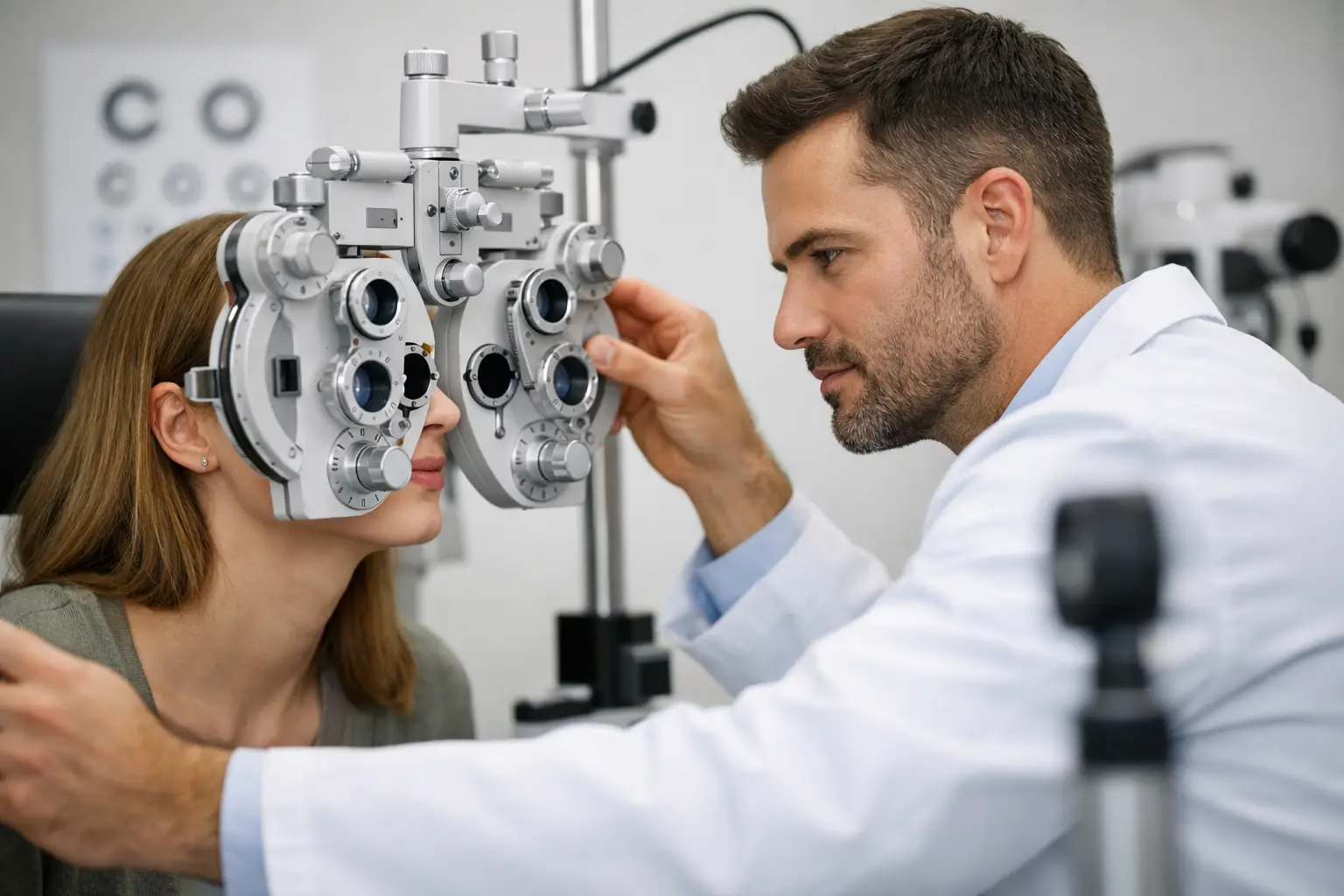
Once the basic screening is done, the doctor usually moves into refraction. This is the part where you look through different lens options and answer the classic question, which is better, one or two? This step fine-tunes your prescription.
Refraction is more precise than many people expect. It is not only about making things sharper. It also helps reduce strain, balance the eyes properly, and improve comfort for reading, driving, and screen use. Sometimes the sharpest option is not automatically the best one if it causes fatigue or does not match how your eyes naturally work together.
That is one reason an independent optical practice can feel different from a rushed chain setting. Good care is not about moving people through quickly. It is about taking enough time to get the details right.
Binocular vision and eye movement checks
Your eyes do not just need to see clearly on their own. They also need to work well together. During the exam, the doctor may check tracking, focusing, and alignment. These tests can help explain symptoms like double vision, headaches, skipping lines while reading, or eye fatigue at the end of the day.
This step is especially helpful for children and adults who spend long hours on screens. Sometimes a person thinks they only need a stronger prescription, but the real issue is how the eyes coordinate. In those cases, the solution may not be as simple as changing lens power.
Eye pressure and internal health checks
A routine eye exam also looks at eye health, not just eyesight. One common test measures the pressure inside the eyes. This is often part of screening for glaucoma, a condition that can damage vision gradually without obvious early warning signs.
Some people worry this test will hurt. In most routine exams, it is quick and manageable. The method used can vary, but the goal is the same – checking whether the pressure is within a healthy range.
The doctor may also examine the front and back of the eye using lights and magnified views. This allows them to look at structures such as the cornea, lens, retina, and optic nerve. These checks can help spot signs of cataracts, retinal problems, macular changes, dryness, or other concerns that may need monitoring or treatment.
In some cases, dilation may be recommended. That means using drops to widen the pupils so the doctor can get a better view inside the eye. Dilation is not needed at every visit, but when it is recommended, it can provide valuable information. The trade-off is that your vision may be blurry and light-sensitive for a few hours afterward, so it is worth planning ahead.
Why an eye exam can be different for each person
No two exams are exactly alike because no two patients are exactly alike. A child getting their first exam, a driver noticing glare at night, and a senior managing multiple prescriptions all bring different concerns to the chair.
For children, the focus may be on visual development, learning-related symptoms, and whether the eyes are teaming properly. For adults, the concern is often clear day-to-day vision, digital strain, or changes that affect work and driving. For older adults, more attention may be given to age-related eye conditions and the balance between distance, reading, and overall comfort.
Contact lens wearers may need extra measurements and fit checks. Patients with diabetes or a family history of eye disease may need closer monitoring. And if you have a strong prescription, prism correction, or a history of prescription changes that never seem to feel quite right, a more personalized approach can make a real difference.
What happens after the eye exam
After the testing is complete, the doctor will explain the results. If your prescription has changed, they will let you know what that means for glasses or contacts. If your vision is stable, that is useful information too. Not every appointment ends with a major change.
You should also be told whether your eyes look healthy or if anything needs follow-up. If there are signs of dryness, cataracts, pressure concerns, or retinal issues, the next steps should be explained clearly. Good care means leaving with answers, not confusion.
If you do need new glasses, this is where honest guidance matters. The right pair depends on your prescription, how you use your glasses, your budget, and what feels comfortable on your face. Some people need an all-day pair. Others may benefit from reading glasses, computer lenses, or prescription sunglasses. There is no single right answer for everyone, and you should never feel pushed toward something you do not need.
That is where a family-run business like Dala Optical can feel refreshingly different. Personal service, fair pricing, and straightforward advice make it easier to choose what actually works for your life.
How to prepare for your appointment
A little preparation can make the visit smoother. Bring your current glasses or contact lens information if you have them. Make note of any symptoms you have noticed, even if they seem small. Blurry vision, tired eyes, glare, and headaches all provide helpful clues.
If you think you may need dilation, it can help to bring sunglasses for the trip home. And if you are booking for a child or older parent, it is worth mentioning any specific concerns ahead of time so the exam can focus on what matters most.
A good eye exam should leave you feeling more confident than when you walked in. You should understand how your eyes are doing, whether your prescription is still right, and what options make sense without pressure. When care is personal and honest, the whole process feels a lot less intimidating – and much more helpful.
Leave a Reply