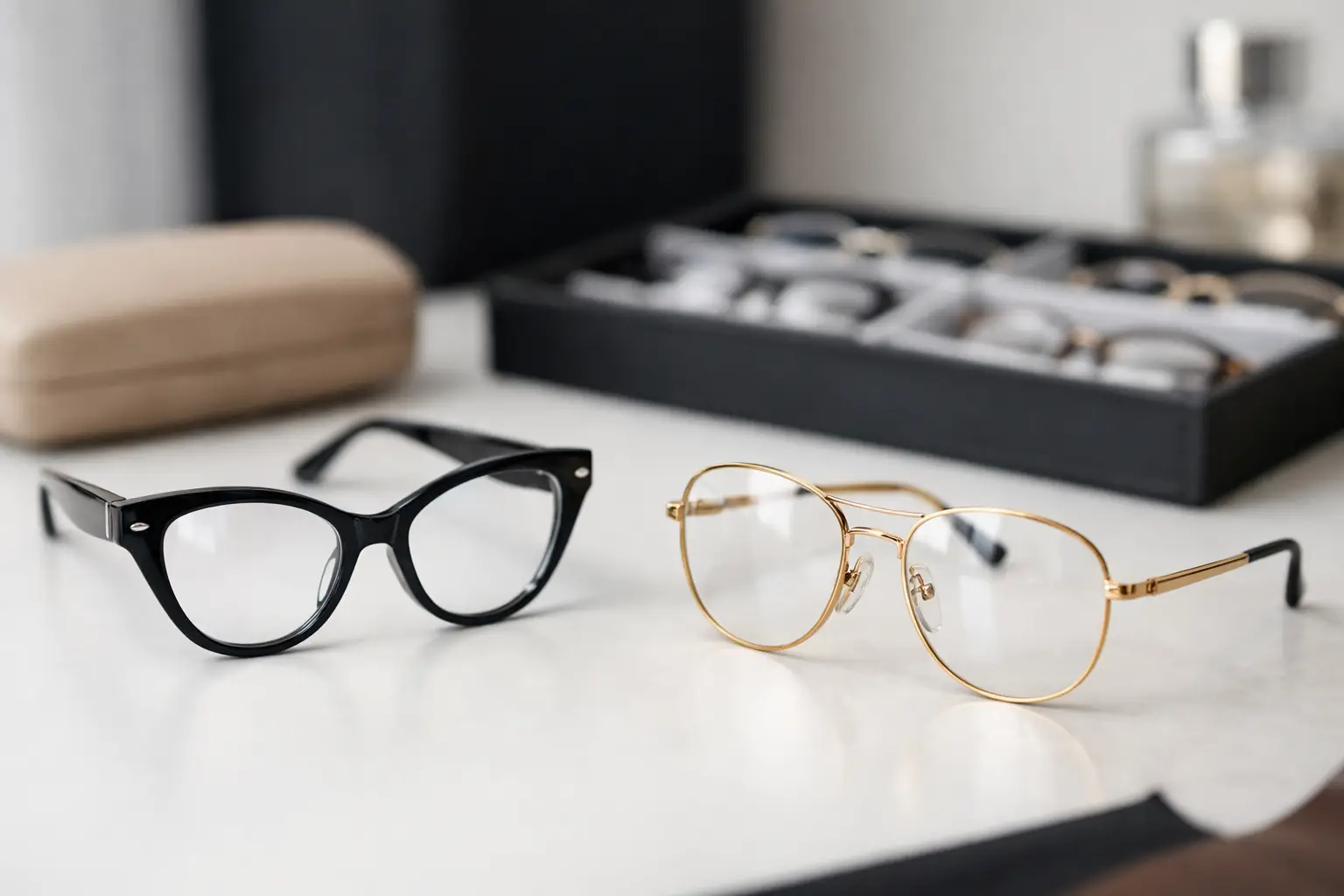
A pair of glasses can be on your face from breakfast through bedtime, which makes the decision feel more personal than buying most accessories. So, are designer frames worth it? Sometimes, yes. But a logo alone is never a good reason to spend more.
The right answer comes down to how the frame fits, how often you will wear it, the quality of its construction, and whether the price makes sense for your budget. A good optical experience should help you sort through those details without making you feel pressured to choose the most expensive option on the board.
Are Designer Frames Worth It? It Depends on What You Need
Designer frames can be worth the investment when they offer something meaningful beyond the name: better materials, more thoughtful construction, a shape that fits you exceptionally well, or a style you will genuinely enjoy wearing for years. For someone who wears prescription glasses every day, those benefits can add up.
At the same time, there are excellent non-designer frames available at more modest prices. A well-made independent frame that fits properly will serve you far better than an expensive designer frame that pinches at the temples, slides down your nose, or feels too delicate for your routine.
The most helpful question is not, “What is the best brand?” It is, “What will make these glasses comfortable, durable, and easy to wear every day?” That answer looks different for a parent buying a child’s first pair, a professional who wears glasses all day, or someone with a stronger prescription that needs a frame chosen carefully.
What You May Be Paying for With Designer Eyewear
The price of a designer frame can include brand recognition and fashion appeal. There is no reason to pretend otherwise. If a particular label does not matter to you, that portion of the price may not feel worthwhile.
But reputable designer collections may also provide real differences in the frame itself. Many use premium acetate, lighter metals, carefully finished hinges, stronger hardware, or more distinctive color and shape options. These details can affect how the frame feels in your hands and on your face.
Material matters, especially for daily wear. Better acetate often has richer color, a smoother finish, and can be adjusted more precisely than very low-cost plastic frames. Quality metal frames may be lightweight while still holding their shape well. Good hinges can make opening and closing the temples feel more secure and help the frame stand up to regular use.
None of these benefits are automatic. Designer does not always mean stronger, lighter, or more comfortable. Some fashion-forward frames are made to make a statement, not to handle rough treatment. That is why it helps to try frames on and have someone explain the differences rather than relying on a name tag.
Fit Is More Valuable Than a Label
A frame can look fantastic in a mirror for thirty seconds and become frustrating by the end of the day. Proper fit affects comfort, appearance, and even how well your lenses perform.
The bridge should sit securely without leaving deep marks or forcing you to push the glasses back into place all day. The temples should rest comfortably without squeezing behind your ears. The frame width should work with your face rather than extending too far beyond it or feeling narrow at the sides.
For prescription lenses, the fit also helps position your eyes correctly within the lens. This is especially relevant for progressive lenses, prism correction, high prescriptions, or other more complex vision needs. The wrong frame size, wrap, or shape can limit lens choices or make the finished glasses harder to adapt to.
That is where personal guidance matters. An optical professional can notice small fit issues that are easy to miss when you are shopping alone. A few adjustments can transform a frame, but adjustments cannot fix a style that is fundamentally the wrong size or design for you.
When Paying More Makes Sense
A designer frame may be a sensible choice if you wear glasses all day and want a pair that feels like part of your personal style. You may also find value in spending more when you have struggled to find frames that fit well, need a particular material because of skin sensitivity, or want a distinctive shape that is hard to find in basic collections.
It can also make sense when you prefer to own fewer pairs and wear each one for several years. In that case, choosing a frame you truly love can be more satisfying than settling for a cheaper option you want to replace quickly.
For some people, eyewear is one of the most visible things they wear. Enjoying the way your glasses look is a valid part of the decision. Confidence is not a technical feature, but it matters when you are wearing something every day.
When a Non-Designer Frame Is the Smarter Buy
There are plenty of situations where a quality non-designer frame is the better value. Children may outgrow their frames or be hard on them during school, sports, and play. Someone who needs multiple pairs – such as computer glasses, sunglasses, and a backup pair – may prefer to spread their budget across practical options.
You may also want to prioritize your lens package instead. Depending on your prescription and daily needs, thinner lenses, anti-reflective treatment, sun protection, or a lens design suited to screen use can have a bigger impact on your vision than a frame label.
A lower-priced frame is not a compromise if it is comfortable, well built, and suits you. The best value is not necessarily the lowest upfront price. It is the pair that meets your needs, lasts appropriately, and does not leave you wishing you had chosen differently.
Look at the Whole Cost of Your Glasses
Frames are only one part of the purchase. Your prescription, lens type, coatings, and adjustments all shape the final cost and your day-to-day experience. It is worth discussing your total budget early, so you can compare options honestly.
Ask which features are most useful for your prescription and routine. If you drive often at night, work on a computer, spend time outdoors, or need progressives, those details should guide the conversation. A good optician should explain your choices plainly and let you decide where you want to invest.
Also ask about warranties, repairs, and replacement support. Glasses go through a lot: accidental drops, loose screws, bent temples, curious toddlers, and the occasional forgotten pair in a hot car. Responsive after-purchase service can make a reasonably priced pair more valuable than a frame that is difficult to maintain or replace.
How to Choose Without Feeling Pressured
Start by trying on a range of prices and styles. You may be surprised by what feels best. Compare how each frame sits on your nose, how it looks from the side, and whether it feels stable when you move naturally.
Then be honest about your lifestyle. If you are gentle with your glasses and want a signature look, a designer frame could be a rewarding purchase. If your glasses need to keep up with children, work sites, frequent travel, or an active schedule, durability and easy replacement may matter more than the label.
At Dala Optical, the goal is not to steer every customer toward designer eyewear. It is to help people find frames that fit their face, prescription, lifestyle, and budget. Sometimes that will be a designer pair. Other times, a more affordable frame is the clear winner.
The right glasses should feel comfortable when you put them on, look like you, and make everyday vision easier. If a designer frame delivers those things at a price you feel good about, it may be worth it. If it does not, you have every reason to choose something else with confidence.
Leave a Reply