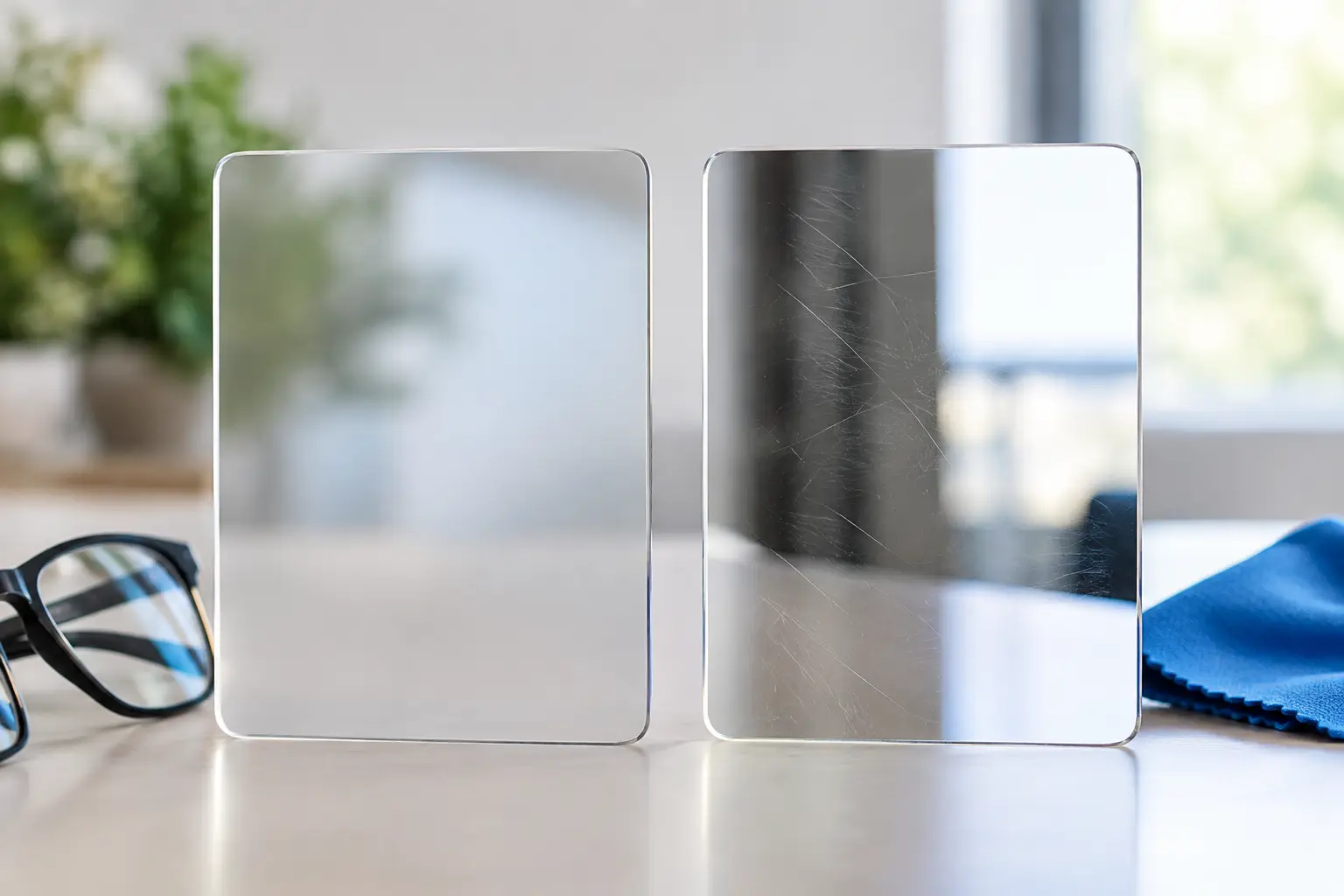
A new pair of glasses can look perfectly clear under store lighting, then feel completely different when you step into bright sun, sit in front of a screen, or drive home after dark. That is why the question of anti glare vs scratch coating comes up so often. Both treatments can make everyday eyewear more comfortable and durable, but they solve different problems.
The good news is that this does not have to be a technical or confusing decision. The best choice depends on how you use your glasses, your prescription, and what tends to frustrate you most about past pairs. For many people, the answer is not one coating or the other. It is a lens package that includes both, chosen with practical advice rather than pressure.
What anti-glare coating actually does
Anti-glare coating, also called anti-reflective or AR coating, reduces the light that reflects off the front and back of your lenses. Without it, you may see distracting reflections in your lenses from overhead lights, windows, headlights, computer screens, or even your own eyes reflected back at you.
The biggest benefit is clearer vision in situations with competing light sources. Drivers often notice it at night, especially around headlights and streetlights. People who work at computers may appreciate a more comfortable view during long days under office lighting. It can also make a noticeable difference in photos and video calls because others can see your eyes more easily instead of seeing glare on your lenses.
Anti-glare coating does not make a lens darker. It does not replace prescription sunglasses, and it does not block all bright light. Instead, it helps more useful light pass through the lens while reducing reflections that can get in the way.
For higher prescriptions, AR coating can be especially worthwhile. Stronger lenses can create more noticeable internal reflections, which may make vision feel less crisp. The coating helps lenses look cleaner and clearer, too, particularly when they are made with thinner, high-index materials.
What scratch-resistant coating does
Scratch-resistant coating is a hard protective layer applied to the lens surface. Its job is to help the lens hold up better against the everyday wear that comes from cleaning, setting glasses down, carrying them in a bag, or simply using them regularly.
The key word is resistant. No lens coating can make glasses scratch-proof. Fine dust, sand, grit, rough paper towels, and a missing case can still damage even a well-coated lens. But scratch-resistant treatment can make lenses more durable and help them stay clear longer than untreated lenses.
This coating is especially useful for children, active wearers, and anyone who is hard on their glasses. It is also a sensible choice for people who keep their glasses on from morning until bedtime. If your lenses are part of your daily routine, they deserve a layer of protection.
A scratch-resistant coating will not reduce reflections from headlights or screens. Its value is protection, not glare control. That distinction is the heart of the anti glare vs scratch coating decision.
Anti glare vs scratch coating: the practical difference
Think of anti-glare coating as a visual comfort feature and scratch-resistant coating as a durability feature. One helps you see through the lens with fewer reflections. The other helps preserve the lens surface against normal wear.
If glare bothers you while driving at night, working on a computer, attending school, or sitting beneath bright lights, anti-glare coating should be high on your list. If you have replaced glasses because the lenses became covered in fine scratches, scratch resistance should be a priority.
In many cases, you do not need to choose between them. Quality anti-glare lens treatments are often paired with a hard coat, because a clear lens surface needs protection as well as reflection control. Still, lens packages vary. It is worth asking exactly what is included, what warranty applies to the coating, and how the lenses should be cleaned.
That straightforward conversation can prevent a common disappointment: assuming every anti-glare lens has the same level of scratch protection, or assuming a scratch-resistant lens will make night driving more comfortable. They are related features, but they are not the same product.
When choosing both makes sense
For most everyday prescription glasses, having both treatments is a practical investment. You get clearer vision in challenging lighting and better protection from the small marks that build up over time.
Both may be particularly helpful if you wear glasses for work and driving, use a computer daily, have a stronger prescription, or want one reliable pair for nearly everything. Parents may also find the combination valuable for a child’s main pair of glasses, although good habits and a sturdy case still matter.
There are situations where you might make a more selective choice. If you are buying a spare pair that will be worn only occasionally, you may focus on the features you will use most. If your main need is outdoor brightness, prescription sunglasses or sun lenses may deserve more of your budget than premium anti-glare treatment. And if you work in a dusty, hands-on environment, proper cleaning habits are just as important as the coating itself.
An optician should be able to walk through these trade-offs without making you feel pushed toward the most expensive option. The right lenses are the ones that suit your life, not the ones with the longest list of upgrades.
Caring for coated lenses
Even the best coating benefits from gentle care. Small scratches often begin when lenses are wiped while dry, especially if dust or grit is sitting on the surface. Before cleaning, rinse your glasses with lukewarm water when possible. Then use a lens-safe cleaner and a clean microfiber cloth.
Avoid cleaning lenses with your shirt, tissues, napkins, or paper towels. They can trap particles or have a rough texture that gradually creates fine scratches. Household glass cleaners, acetone, and other strong chemicals can also damage lens coatings.
When you take your glasses off, store them in a hard case instead of placing them lenses-down on a table or car console. Keep them away from high heat, too. Leaving glasses on a hot dashboard can affect frames and may shorten the life of some lens treatments.
If your lenses start looking hazy, peeling, heavily scratched, or difficult to clean, bring them in for an honest assessment. Sometimes a professional cleaning helps. Other times, replacing the lenses is the more sensible choice. A trusted optical team can explain the options clearly and help you avoid paying for more than you need.
Questions to ask before ordering lenses
A few simple questions can make your decision much easier. Ask whether the anti-glare treatment includes scratch-resistant protection, whether the coating has a warranty, and what kinds of damage are covered. Ask how the coating performs with your lens material and prescription, especially if you are choosing thinner lenses or progressives.
It also helps to describe your routine rather than just asking for the “best” coating. Mention if you drive after dark, spend long hours on screens, work outdoors, care for young children, play sports, or have had coatings wear poorly in the past. Those details give your optician something useful to work with.
At Dala Optical, the goal is to make those choices feel clear and comfortable. A personal fitting and lens conversation can account for the parts of your day that a quick online checkout cannot see.
The right coating should quietly make your glasses easier to live with: fewer distracting reflections, better protection from daily wear, and confidence that your lenses suit the way you actually move through the day.
Leave a Reply