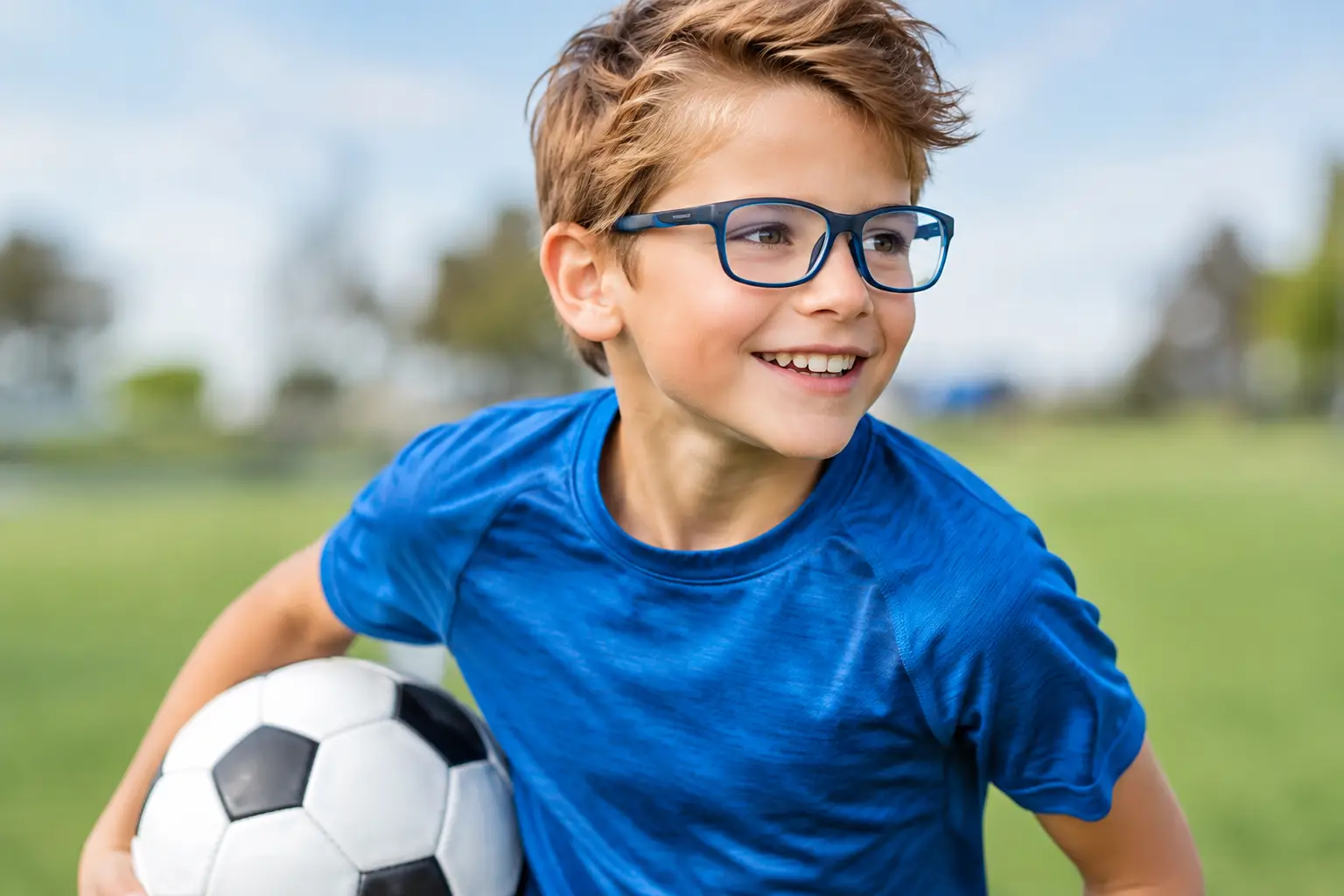
A child’s glasses have to survive much more than a school day. They need to stay comfortable through recess, gym class, playground climbing, bike rides, and the occasional tumble. The best glasses for active children are not simply the toughest-looking pair on the display. They are the pair that fit securely, feel good enough to wear all day, and provide the right vision and protection for how your child actually moves.
For parents, that often means looking beyond color or brand name. A well-chosen pair can reduce slipping, prevent frequent adjustments, and make a child more likely to wear their glasses without a daily battle. The goal is dependable eyewear that supports their independence – without paying for features your child does not need.
Start With a Fit That Can Keep Up
The right fit matters more than almost any frame feature. A pair that is too wide will slide down during play. Frames that pinch behind the ears or press on the nose can become distracting, especially for a child who needs to wear them from morning until bedtime.
A good fit should place the lenses in front of the eyes, not low on the cheeks or resting at the tip of the nose. The frame should sit level, and the temples should hold gently behind the ears without leaving deep marks. Children often cannot explain that a frame is uncomfortable. Instead, they push it up constantly, take it off, or avoid wearing it altogether.
For younger children, a lower bridge fit can be especially helpful. Many children have a smaller or less-defined nose bridge, so a frame with properly positioned nose pads or a design made for younger faces may stay in place better than a standard adult-style frame. Ear hooks or curved temple ends can also add security for children who are constantly on the go.
It is tempting to buy frames with extra room to grow. A little flexibility is reasonable, but oversized glasses are usually a poor trade-off. If the lenses are not centered properly in front of the eyes, comfort and vision can suffer. A professional fitting helps you choose a frame that works now and can be adjusted as your child grows.
What Frames Work Best for Active Kids?
There is no single best material for every child. The right choice depends on their age, prescription, activities, and how carefully they tend to handle their glasses.
Flexible plastic frames are popular for young children because they are lightweight, comfortable, and less likely to bend out of shape during normal play. Some are designed with extra-flexible hinges or more resilient materials, which can be a practical choice for a child who is still learning how to care for glasses.
Metal frames can also work well, particularly for older children who want a lighter, more refined look. They can often be adjusted very precisely around the nose and ears. The trade-off is that thin metal frames may need more frequent adjustment after rough play, and they are not always the best choice for a child who regularly bends or twists their glasses.
A sturdy plastic frame with spring hinges often offers a comfortable middle ground. Spring hinges allow the temples to open a little farther without immediately stressing the frame, which is useful for children who take glasses on and off quickly. They are helpful, but they are not indestructible. Any frame can be damaged if it is stepped on, thrown into a backpack without a case, or used as a toy.
When choosing a shape, look for lenses that provide good coverage without touching the cheeks or eyebrows. A frame that is too shallow may leave more of a child’s field of vision uncovered. A frame that is too large may slip or feel heavy. Let your child have a say in color and style, but make fit the final deciding factor.
Lenses Matter as Much as the Frame
For active children, impact-resistant lens material is usually a smart starting point. Polycarbonate lenses are lightweight and highly impact-resistant, making them a common choice for children’s everyday prescription glasses. They also provide built-in UV protection.
Trivex lenses are another excellent option. They are also impact-resistant and can offer particularly clear optics, though they may cost more depending on the prescription and lens package. For many families, polycarbonate is a practical, reliable choice. For a child with a more complex prescription, your optician can help weigh clarity, thickness, weight, and budget.
A scratch-resistant coating is worth considering because children’s glasses encounter desks, backpacks, playground equipment, and plenty of small hands. It will not make lenses scratch-proof, but it can help them hold up better over time. An anti-reflective coating may also be useful for children who spend a lot of time reading, using screens, or working under bright classroom lighting. It can improve the appearance of the lenses and reduce distracting reflections.
Avoid assuming that every lens material is equally appropriate for a child. Standard plastic lenses may be suitable in some situations, but they generally do not offer the same impact resistance as polycarbonate or Trivex. A personalized recommendation is more valuable than selecting the cheapest lens option without considering daily use.
Everyday Glasses Are Not Sports Goggles
Prescription glasses are made for daily vision, not necessarily for contact sports. If your child plays basketball, soccer, baseball, hockey, racquet sports, or any activity with a real risk of impact, ask about prescription sports goggles designed for that purpose.
Sports goggles typically use a wraparound or close-fitting design, a secure strap, and impact-resistant lenses. For sports where eye protection is recommended or required, they are a safer choice than regular eyeglasses. Even a durable everyday frame can shift, break, or cause injury if it takes a direct hit.
For outdoor activities, prescription sunglasses can be helpful when your child is sensitive to glare or spends long periods outside. A good pair should provide UV protection and fit securely enough for walking, biking, and casual play. For highly active outdoor sports, dedicated sports eyewear is often the better option.
Small Details That Make Glasses Easier to Wear
The best glasses for active children often include simple details that make a noticeable difference over a long day. Consider whether your child needs a more secure temple shape, adjustable nose pads, a lightweight frame, or a strap for certain activities.
A strap can be useful for toddlers, younger children, and kids who remove their glasses frequently. It should be comfortable and properly adjusted, not so tight that it causes pressure behind the head. For older children, a strap may be best reserved for sports or high-energy outings if they prefer a more traditional look at school.
It also helps to build a few care habits early. Keep a hard case in the backpack, use both hands to take glasses off, and place them lenses-up when a case is not nearby. These habits will not prevent every repair, but they can reduce avoidable damage.
Let Your Child Be Part of the Choice
Children are much more likely to wear glasses they feel good about. Once you have narrowed the options to frames that fit well and meet their needs, let them choose between a few parent-approved styles. A favorite color, a subtle pattern, or a frame that feels more grown-up can turn glasses from something they have to wear into something that feels like theirs.
At the same time, be honest about what is practical. A very delicate frame may not suit a child who spends every afternoon at the park. A larger fashion frame may look great in the mirror but slide during gym class. The right choice respects your child’s preferences while giving them a pair that can handle real life.
A Personal Fitting Can Save Frustration Later
Children’s eyewear is not a one-size-fits-all purchase. Two children with the same prescription may need completely different frames because their face shape, nose bridge, ear position, and activity level are different. Measurements and adjustments are part of making glasses work well, not an unnecessary extra.
At Dala Optical, families can take the time to find a frame that feels comfortable, looks right, and fits a child’s day-to-day routine. Honest guidance is especially useful when you are deciding between flexible frames, lens materials, coatings, or sports eyewear. There should be no pressure to add features that do not make sense for your child.
Children grow, prescriptions can change, and glasses sometimes need a quick adjustment after a busy week. Choosing a pair with the right fit and reliable support gives your child one less thing to worry about. When their glasses stay put, feel comfortable, and help them see clearly, they are free to focus on what children do best: moving, playing, and being themselves.
Leave a Reply