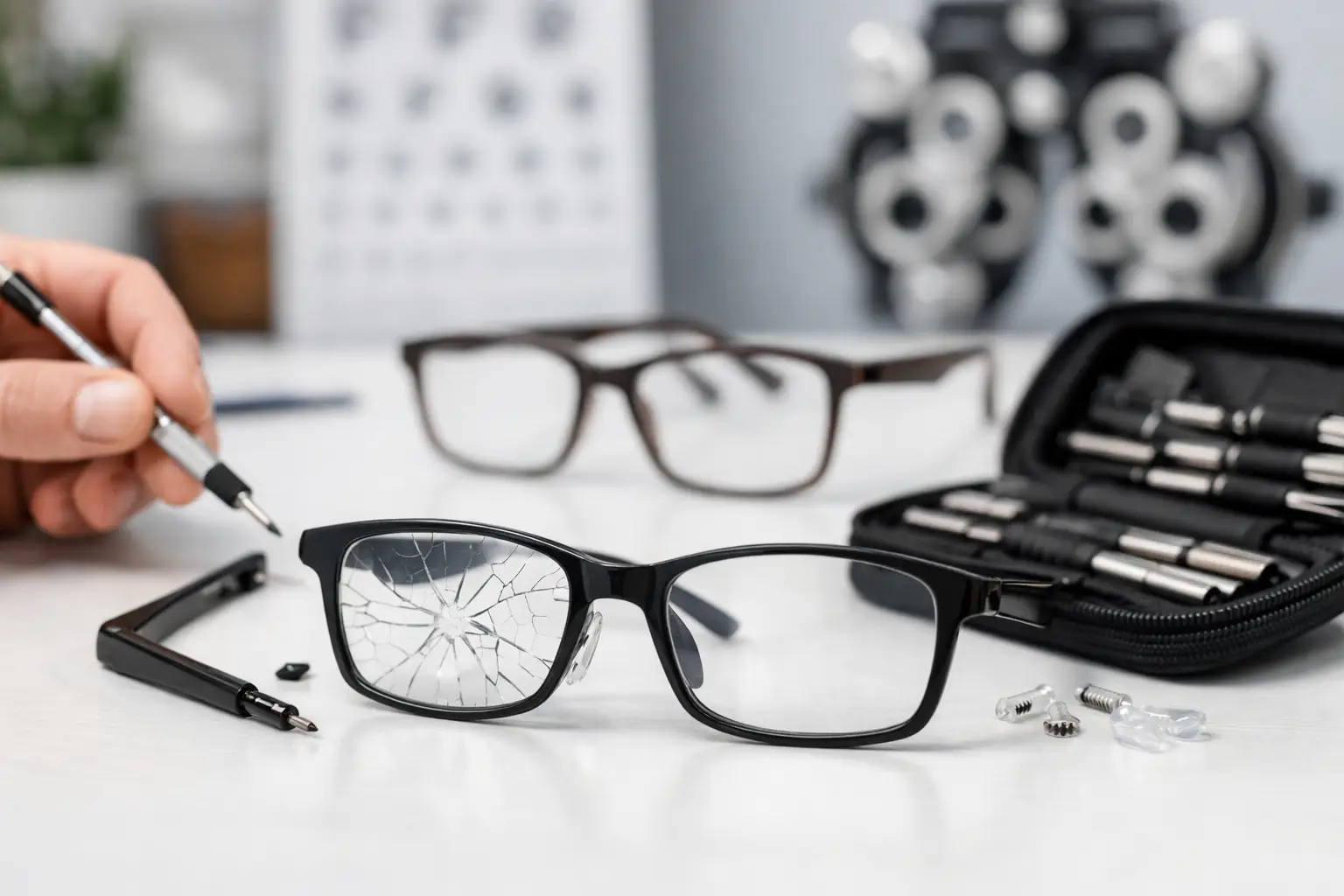
A broken hinge at 7 a.m. can throw off your whole day. If you need to replace broken prescription glasses, the good news is that you may have more options than you think – and the right next step depends on what broke, how current your prescription is, and whether you want the fastest fix or the best long-term value.
For many people, the first reaction is to tape the frame, keep wearing scratched lenses, or order the cheapest pair they can find online before really knowing what they need. That can work in a pinch, but it can also lead to headaches, poor fit, and money spent twice. When your glasses are part of your everyday routine, a thoughtful replacement usually saves time and frustration.
When should you replace broken prescription glasses?
Not every broken pair needs a full replacement. Sometimes a quick repair is enough, especially if the lenses are still in good shape and the frame issue is minor. A missing screw, a loose nose pad, or a frame that has slipped out of alignment can often be fixed without starting over.
Other situations are different. If the frame is cracked at the bridge, the hinge is torn out, or the lenses are chipped, replacement is often the smarter choice. The same goes for glasses that no longer match your prescription well. If you were already squinting before they broke, repairing them may only delay the upgrade you already need.
For children, replacement tends to make sense sooner. Kids are hard on frames, and comfort matters. If a repaired pair keeps sliding, pinching, or sitting crooked, it can affect how consistently they wear them.
The first things to check before you replace broken prescription glasses
Before you buy anything, take a minute to gather the basics. That small pause can help you avoid ordering the wrong lenses or choosing a frame that does not fit your needs.
Start with your prescription. If it is recent and your vision feels stable, you may be able to replace your glasses using the same numbers. If it has been a while since your last eye exam, or if your vision has changed, this is a good time to have it checked. A new pair should solve the problem, not carry the old one forward.
Next, look at the condition of your current lenses. In some cases, lenses can be moved into a new frame if the shape and fit are compatible. In other cases, that is not realistic. High prescriptions, progressive lenses, prism correction, and specialty coatings usually need a more careful review.
It also helps to think about how you use your glasses. Are these your only pair? A work pair? Reading glasses? All-day wear glasses? Someone who wears glasses from morning to night has different needs than someone who uses them only for driving.
Your replacement options depend on what matters most
The best way to replace broken prescription glasses is not always the cheapest route, and it is not always the fastest one either. Usually, people are balancing three things: speed, comfort, and cost.
If speed matters most, you may want to ask whether your current lenses can be reused or whether there is a frame in stock that works with your prescription needs. This can sometimes shorten the process. It depends on the break, the lens type, and the condition of the existing lenses.
If cost matters most, it is worth asking about warranty coverage, manufacturer support, and benefit eligibility before buying a full new pair. Many people assume they have to pay out of pocket right away when that is not always true. A good optical store should help you understand what is covered and what is not without pushing you into extras you do not need.
If comfort and long-term value matter most, an in-person fitting is hard to beat. A frame can look fine but still sit wrong on your face, press behind the ears, or place the lenses at the wrong height. That is especially important for multifocal wearers, seniors, and anyone with a stronger or more complex prescription.
Why in-person help often makes replacement easier
When glasses break, people usually want a quick answer. The problem is that eyewear is personal. Two pairs that look almost identical can feel completely different once they are on your face.
An experienced optician can often tell right away whether a repair is worth trying, whether your lenses can be saved, or whether replacement is the better call. That kind of honest guidance matters because it keeps you from spending money on a short-term fix that will fail again in a week.
In-person service also helps with details that are easy to miss online. Frame width, bridge fit, temple length, lens thickness, and how the frame sits on your nose all affect comfort and clarity. If your old glasses were never quite right, replacement is a chance to correct that.
For families, that support matters even more. Parents want durability. Teens want something they will actually wear. Older adults may need help comparing lens options without feeling overwhelmed. A local optical store can walk through those choices in a way that feels clear and pressure-free.
Reusing old frames or old lenses – when it works and when it does not
A lot of people ask whether they can keep part of their current glasses to save money. Sometimes yes, sometimes no.
If your frame broke but your lenses are in excellent condition, there may be a chance to fit them into an identical frame or a compatible replacement. That tends to work best when the original model is still available and the lenses are not too worn. Even then, there is some risk during the transfer process, especially with older lenses.
If your lenses are scratched, outdated, or no longer giving you clear vision, it usually makes more sense to start fresh. Rebuilding around old lenses can feel economical in the moment, but it may leave you with a pair that still does not perform the way it should.
Reusing an old frame for new lenses can also be possible, but only if the frame is still structurally sound. Frames weaken over time. Plastic can become brittle, and metal can lose its shape. If the frame is already stressed, putting new lenses into it may not be the best investment.
Insurance, warranties, and out-of-pocket costs
Replacing glasses can feel expensive, especially when the break was unexpected. That is why it helps to ask a few practical questions upfront.
Do you have vision benefits that cover a replacement? Is the frame under warranty? Is the damage considered accidental, or is there a manufacturer issue involved? Could a repair buy you enough time to use benefits at the right moment rather than rushing into a purchase today?
These questions do not always lead to a lower price, but they often lead to a better decision. Honest optical service should include a real conversation about budget. Some customers want the most affordable option that still holds up well. Others are willing to spend more for lighter materials, premium lenses, or a backup pair. Neither approach is wrong. The goal is simply to match the solution to your life.
What to bring when you come in
If you are replacing broken glasses, bring the damaged pair with you, even if they seem beyond saving. The frame, lenses, and old measurements can all help guide the next step.
Bring your current prescription if you have it, along with any insurance or benefit information. If you wear contacts too, mention that. And if there was anything you disliked about your old glasses – sliding, pressure, blurry reading zones, heavy lenses – say so. A replacement should not just copy the old problem.
At Dala Optical, that kind of conversation is part of the service. People often come in thinking they need one thing and leave feeling relieved because there was a simpler or smarter option.
A broken pair can be a useful reset
Nobody plans for broken glasses, but sometimes the inconvenience points to something worth fixing beyond the frame itself. Maybe your prescription has changed. Maybe your glasses never fit properly. Maybe you have been putting up with discomfort because you did not want the hassle of replacing them.
If that sounds familiar, this is a good moment to slow down and choose a pair that works better for your day-to-day life. Clear vision, a comfortable fit, and straightforward advice should not feel hard to find.
When your glasses break, the fastest choice is not always the right one. The right one is the pair that helps you get back to seeing clearly – and feeling taken care of – without added stress.
Leave a Reply